PETG 3D Printing

PETG 3D Printing Service

Balanced all-rounder — easy to print, chemical-resistant, and food-contact safe.

FDM Process±0.2 mm toleranceLayer height 0.1 – 0.32 mm~70 °C

Best for

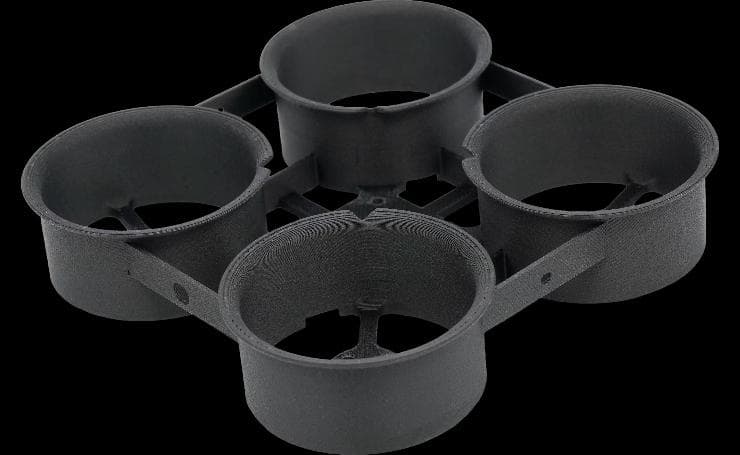
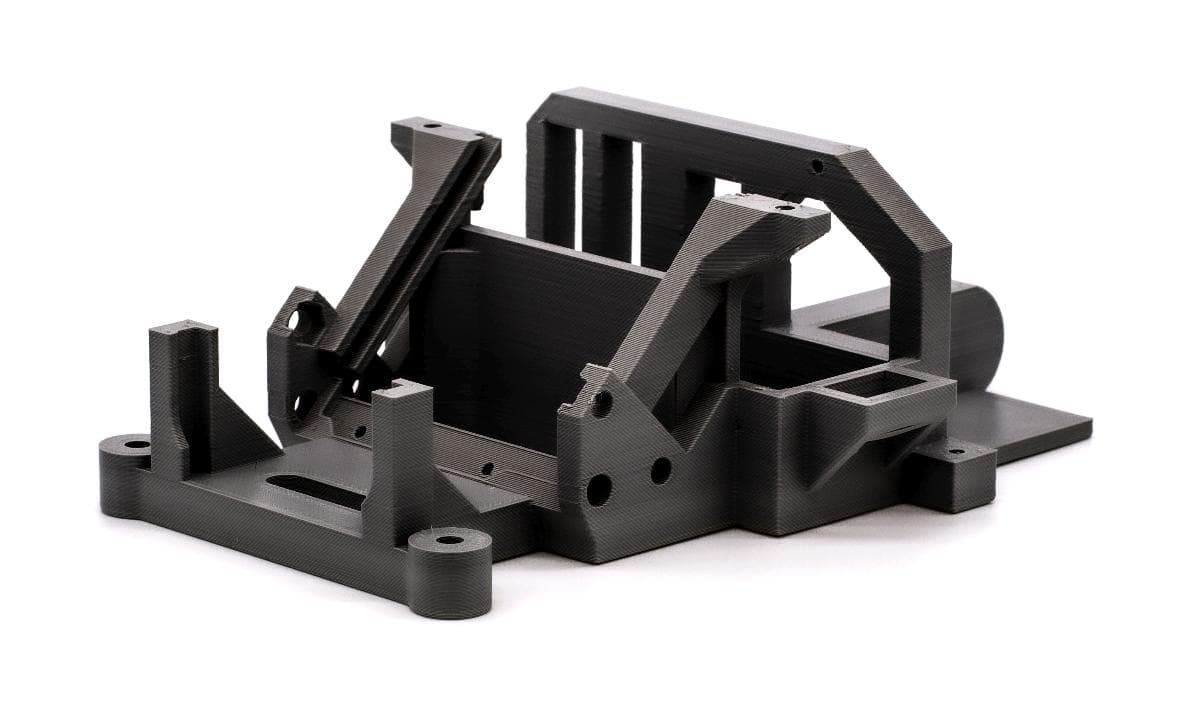
Mechanical parts, food-safe containers, medical housings, display cases

PETG (Polyethylene Terephthalate Glycolate) is the material engineers reach for when PLA is too brittle and ABS is too difficult. It combines PLA's easy printing with ABS-like toughness, adds genuine chemical resistance, and prints with almost no warping on an open machine.

The standout property is layer adhesion. PETG bonds to itself extremely well, giving parts that are close to near-isotropic in strength — load it in any direction and it behaves similarly. That makes it the safest general-purpose choice for load-bearing printed parts.

PETG is also the material to pick when the part will touch food, mild chemicals or cleaning agents. Clear grades let you build fluid-visible parts and light pipes, and the material machines and sands cleanly after printing.
PETG Properties at a Glance

Heat Deflection (HDT):~70 °C — better than PLA, suitable for moderate-heat environments
Chemical Resistance:Good — resists mild acids, oils, and common cleaning agents
Layer Adhesion:Excellent — near-isotropic strength; strong in all directions
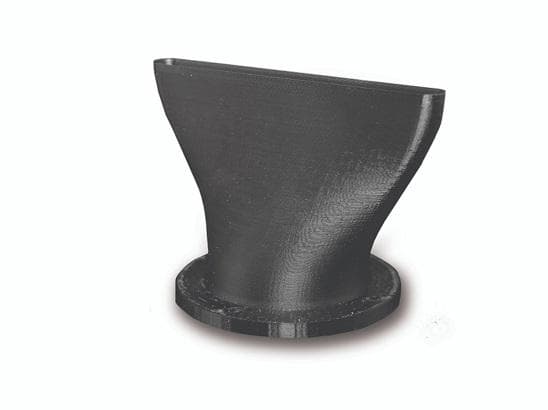
Transparency:Available in clear grades — suitable for fluid-visible parts and light-pipes

PETG Technical Specifications

Technical specifications for PETG FDM 3D printing
ProcessFDM
Density~1.27 g/cm³
Tensile Strength~50 MPa
Elongation at Break~6% (rigid grades)
Heat Deflection Temp.~70 °C
Chemical ResistanceMild acids, oils, cleaning agents
HygroscopicityDrying recommended before long prints
ColoursSolid colours plus clear and translucent grades

Typical Applications

  • ✓Mechanical brackets and load-bearing mounts
  • ✓Food-contact containers and kitchen tooling
  • ✓Enclosures with snap-fit features
  • ✓Display cases, signage and light boxes
  • ✓Clear fluid and flow demonstration parts
  • ✓Shop and warehouse components

Limitations to Know

  • !Abrasive against brass nozzles — a hardened steel nozzle is required
  • !Not as easy to vapour-smooth as ABS
  • !Occasional stringing if the filament is damp
  • !Not for sustained high-temperature service above ~70 °C

How We Print PETG

  • Printed at higher temperatures than PLA for full layer adhesion
  • Stringing is controlled by retracting into the machine rather than brushing the bed
  • Available in food-contact grades where the application requires it

PETG 3D Printing FAQ

Is PETG food safe?+

Food-contact grades of PETG are widely used for containers and kitchen parts because the polymer resists acids, oils and cleaning agents and does not leach the way some plastics do. For anything that touches food or goes into a medical context, tell us at checkout so we can assign a food-contact grade explicitly.

What is the difference between PLA and PETG?+

PLA is stiffer, cheaper and gives a slightly better-looking surface. PETG is tougher, more flexible, more chemically resistant, far more heat resistant and has much stronger layer adhesion. Choose PLA for looks and prototypes, PETG for anything that will be used.

Can PETG be printed clear?+

Yes, clear and translucent PETG grades are available. They are not optically perfect like resin, but they are excellent for fluid-visible parts, light pipes and display cases where you want to see what is happening inside.

Does PETG need to be dried before printing?+

PETG is mildly hygroscopic, so filament that has been open to humid air can bubble and string. We dry and seal all PETG before printing and monitor it on every job, so you receive consistent parts without bubbles or cosmetic stringing.

Compare with other materials

Also in Standard FDM Materials: browse all materials

Get an instant PETG 3D printing quote

Upload your STEP or STL file and see your exact price — material, machine time and delivery included — in under two minutes.