ABS 3D Printing

ABS 3D Printing Service

Tough, machinable, and acetone-smoothable — a proven engineering classic.

FDM Process±0.2 mm toleranceLayer height 0.1 – 0.32 mm~90 °C

Best for

Functional enclosures, clips, consumer electronics housings, tooling aids

ABS (Acrylonitrile Butadiene Styrene) is one of the most widely used engineering thermoplastics in the world, and for good reason. It is tougher and more impact-resistant than PLA, tolerates meaningfully higher temperatures, machines well, and can be vapour-smoothed with acetone to a near-moulded finish.

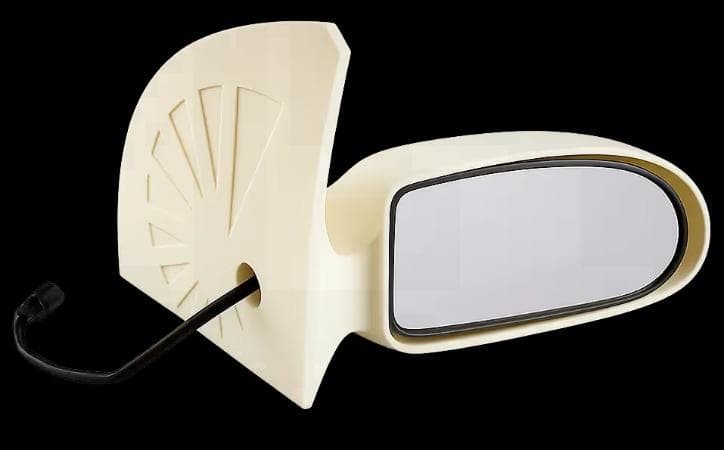
ABS is the go-to for functional enclosures, clips, brackets, snap-fit assemblies and consumer electronics housings — anything that has to survive being dropped, twisted or handled repeatedly. It is also the standard choice for automotive interior parts, where the temperature under a dashboard regularly exceeds PLA's limits.

The one trade-off is warping. ABS shrinks as it cools, which pulls the corners of a large print off the bed and causes layer splitting. We print it in an enclosed, temperature-controlled chamber and lay it out with the correct orientation so you receive a flat, warp-free part.
ABS Properties at a Glance

Heat Deflection (HDT):~90 °C — handles moderate heat, suitable for automotive and enclosure use
Impact Resistance:Good — absorbs repeated mechanical stress better than PLA
Machinability:Excellent — drillable, tappable, and acetone-vapour smoothable to near-moulded finish
Warping Tendency:High — requires enclosed printer and controlled environment

ABS Technical Specifications

Technical specifications for ABS FDM 3D printing
ProcessFDM
Density~1.04 g/cm³
Tensile Strength~40 MPa
Impact StrengthHigh for a commodity thermoplastic
Heat Deflection Temp.~90 °C
Layer Height0.12 mm – 0.32 mm
MachiningDrill, tap, mill and file cleanly
FinishingAcetone vapour smoothing available

Typical Applications

  • ✓Product enclosures and housings
  • ✓Automotive interior components
  • ✓Snap-fit and click assemblies
  • ✓Machine guards and covers
  • ✓Camera and drone mounts
  • ✓Workshop jigs and fixtures

Limitations to Know

  • !Warps without an enclosed, heated print chamber
  • !Emits styrene and other fumes — not recommended for unsupervised indoor printing
  • !UV exposure causes yellowing and embrittlement over time (use ASA for outdoor parts)
  • !Heavier and more expensive than PLA for the same volume

How We Print ABS

  • Printed inside a sealed, actively heated chamber to eliminate corner lift
  • Large flat parts are laid out with the orientation you need, not the fastest one
  • Available raw or acetone vapour-smoothed for a glossy, injection-moulded look

ABS 3D Printing FAQ

Is ABS stronger than PLA?+

For impact and everyday durability, yes. ABS absorbs shock and repeated mechanical stress far better than PLA, which is stiff but brittle. In pure tensile terms the two are comparable — PLA stretches a little less before breaking. For load, impact and heat, choose ABS.

Why does my ABS print warp, and can you prevent it?+

ABS shrinks as it cools, and that shrinkage pulls large prints off the build plate and splits layers. The fixes are an enclosed chamber, a heated bed and correct part orientation. We print all ABS in a sealed heated chamber, which is why you receive warp-free parts.

Can you give ABS parts a smooth finish?+

Yes. Acetone vapour smoothing melts the outer surface of the print and re-solidifies it, removing layer lines and producing a glossy finish close to injection-moulded plastic. Select the smoothed finish option when ordering your quote.

Is ABS safe to print indoors?+

ABS emits styrene during printing, so it should only be printed in a well-ventilated space or a filtered enclosure — which is exactly what our machines are. Finished ABS parts are safe to handle under normal conditions.

Compare with other materials

Also in Standard FDM Materials: browse all materials

Get an instant ABS 3D printing quote

Upload your STEP or STL file and see your exact price — material, machine time and delivery included — in under two minutes.